This is one of our bigger projects this year. I have been watching plant towers for more than a year and researching various designs. There is no way of knowing what works and what doesn’t… let alone all the nuances until you implement it yourself though (or at least thats been my experience).
This experiment is intended to determine out of the designs, which is best from a growth, watering, planting, and sustainability perspective. We have learned alot so far, and there is no way I’m going to fit it all into one post so I’m breaking this up into several parts including:
- Tower construction and types
- Media types and ways to plant
- Water type, containers, connections, consumption and fertilization
- What would I do differently next time?
So this is just going to be an overview of the process so far, and some cool pictures of how its coming along! I have to say I was really surprised to see some plants that looked dead as could be come back to life and start thriving in our towers!
Lets start with the goals we are trying to accomplish with the strawberry towers :
- Increase the square footage we have to grow in a otherwise small area.
- Provide the ability to change the elevation of plants to better capture sunlight
- Create a backdrop which will allow us to attach a mylar surface for adding more light to the rest of the garden
- Make it simpler to harvest the berrys
- Leverage gravity for our watering
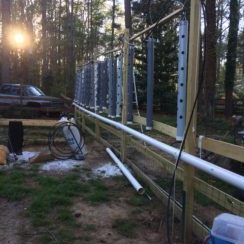
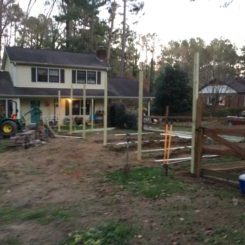
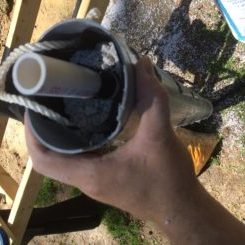
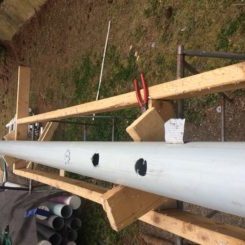
We started by creating a structure using 4x4x12′ beams. Each one is buried 2′ in the ground, and attached between each other with 1x6x10′ boards (to keep the critters out of our garden). This provides us the ability to raise the towers up to 10′ in the air which met our goal of raising the garden vertically. This lets us hang 60 4″ PVC towers in a 50′ space (roughly every 8 inches). The max the current towers can handle is around 12 plants, although I have some experimental ideas for doubling that. Which means in short, right now we are capable of handling 720 plants in our 1’x50′ space. Not too bad for density. Doubling it would be over 1400 plants for every 50′.
The tower wall cannot be considered for the entire garden since it naturally creates a substantial shadow (which we might end up leveraging for shitake mushroom logs and maybe a nice workbench). But it makes an excellent border. Further, if you paint the towers white (or get white PVC) then the reflection will add a nice additional source of light from the opposite side for any plants in the normal part of the garden.
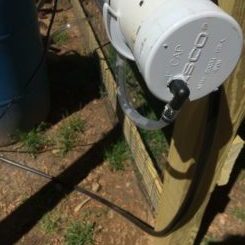
We started the system with 25 towers currently in production all fed by a single 55 gallon foodsafe drum. I ended up utilizing a very inexpensive DC pump that is capable of 10L/min to 16ft height. The system pumps water from the lower East end to the upper West end. This ensures that the tank is never dry as gravity feeds the water back to the barrel through the return lines.
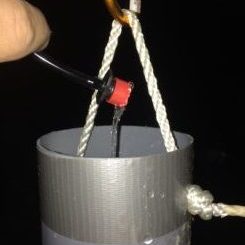
I chose the DC pump as I want to make the system 100% solar driven as well. We just aren’t quite there yet. Right now its rigged using a simple mechanical wall timer into a universal power supply that provides 2.5 amps at 12 Volts. It took me awhile to get the towers to the point they weren’t leaking everywhere and getting the nozzles properly dialed in, but we are there now. I generally consume around 2-4 gallons of water per day for the whole system.
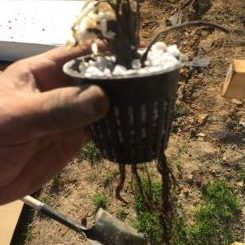
We ordered “bare roots” plants from a Nursery in Michigan. These were everbearing and this also may have been a mistake but there is only one way to find out! Unfortunately, I ordered them well before the towers were done with the intention of giving myself a deadline… which was a great idea… but it actually took an additional week before I could start getting the strawberries in… and then took an additional chunk of time learning how to best plant the roots. So the first 50 took almost an entire day. Then it went much more quickly, but I still only salvaged a little over 100 plants out of the initial 200. On the other hand, now I have a pretty solid understanding of planting these little guys and the system is all in place, so next year it should be running at full capacity. I would also like to experiment with several different strawberry varieties to see which ones perform the best. So just to keep it simple I think we will likely double our capacity next year to 400 plants with 100 each from several varieties.
Thats the gist so far though. We have had substantial new growth from the plants, many coming back to life from what looked to be quite dead plants. I will be going into much greater detail in the posts to come, as well as covering how the crop is growing. I also plan to utilize the rest of the unused spots for other kinds of crops including various lettuces to see how they do. Stay tuned!